In 2026, modern diagnostics in UK garages can no longer be driven by experience alone or by replacing components on suspicion. Vehicle systems have evolved into tightly interconnected electronic and software-driven architectures, where faults rarely originate from a single failed part.
Despite this evolution, many workshops still rely on trial-and-error replacement as a shortcut to problem resolution. On modern vehicles, this approach increasingly leads to misdiagnosis, repeated repairs and rising operational costs. Diagnosis is no longer a preliminary step in the repair process; it has become its central pillar.
Why replacing parts without testing is riskier than ever
Vehicles entering workshops today integrate multiple ECUs, sensor networks, software layers and safety systems. A fault code is often the result of a system imbalance rather than a defective component.
Common root causes include:
Signal inconsistencies caused by wiring resistance or grounding issues
Software mismatches following incomplete updates
Calibration drift after previous repairs
Interactions between powertrain, ADAS and energy management systems
Replacing a component without functional testing frequently masks the symptom rather than addressing the cause. When the fault returns, the workshop’s credibility is questioned and vehicle downtime increases.
Financial and operational consequences
From a financial standpoint, unnecessary parts replacement creates hidden losses. Parts costs are not always recoverable, and labour time spent on repeat interventions reduces overall productivity.
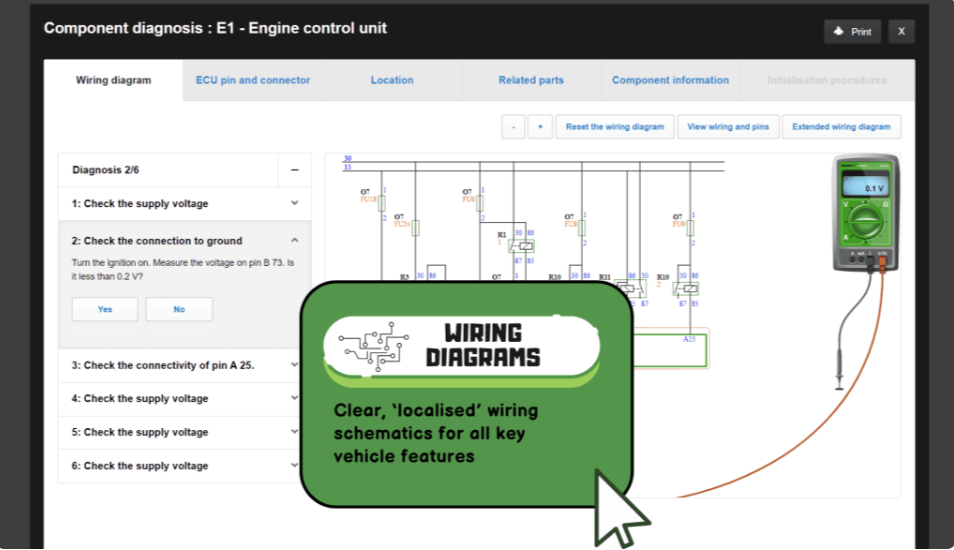
• wiring diagrams
• ADAS calibration steps
• known issues and fixes (SmartFIX)
• real workshop case resolutions (SmartCASE)
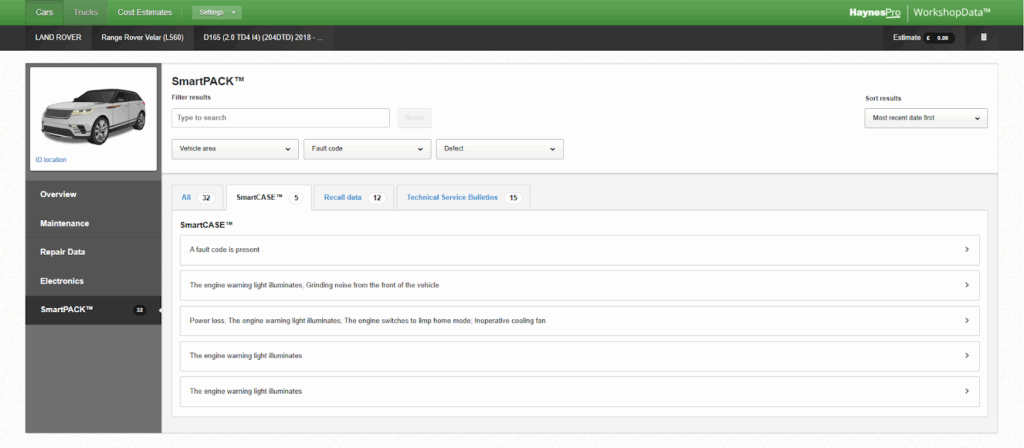
Operationally, repeated repairs disrupt workshop planning. A vehicle returning for the same issue blocks bays, delays other jobs and increases pressure on technicians and service advisors.
From a liability perspective, manufacturers and parts suppliers increasingly require evidence-based diagnostics. Replacing parts without documented testing exposes garages to warranty rejection and customer disputes.
Technology changes reshaping diagnostics
Between 2024 and 2026, diagnostic complexity increased significantly:
Fault codes now indicate system behaviour, not component failure
ADAS systems require verification and calibration after many repairs
Software updates have become routine and vehicle-specific
Without structured technical information, interpreting these systems becomes guesswork. Testing procedures, reference values and system logic are now essential to accurate diagnosis.
📘 See also: Why HaynesPro Is a Game-Changer for Multi-Brand Workshops
📘 See also : HaynesPro SmartDATA : Reducing comebacks during the busy winter repair season
Common diagnostic errors in workshops
Typical mistakes include:
Treating fault codes as definitive proof of component failure
Skipping manufacturer-recommended test sequences
Ignoring basic electrical checks such as voltage drop and continuity
These shortcuts often lead to unnecessary replacements and recurring faults, undermining customer trust.
Best-practice diagnostic approach in 2026
High-performing workshops adopt a structured diagnostic methodology:
Always test before replacing components
Follow documented, vehicle-specific procedures
Use wiring diagrams and reference values
Recognise diagnosis as a billable, value-adding operation
Train technicians to interpret data, not just read codes
This approach reduces repeat repairs, protects margins and improves workshop reputation.
📘 See also: Why HaynesPro Is a Game-Changer for Multi-Brand Workshops
📘 See also: HaynesPro 2025 Updates: Expanded Vehicle Coverage
In this context, HaynesPro is widely recognised in the UK aftermarket as a professional technical information reference supporting structured diagnostic workflows. By providing access to manufacturer-aligned procedures, wiring diagrams and system logic, HaynesPro helps workshops move away from guesswork and adopt a diagnostic approach suited to the complexity of modern vehicles.
By integrating HaynesPro’s diagnostics and repair protocols, workshops can offer comprehensive battery checks, ensuring that all EVs are winter-ready and compliant with the evolving standards for 2026.
For those interested in exploring Haynes Pro’s features before committing, the Haynes Pro free trial and Haynes Pro free access options are perfect starting points.
With the free trial, users can test out the software’s full range of features, including detailed vehicle repair data, diagnostic tools, and step-by-step guides.
For those looking for a more limited yet valuable introduction, Haynes Pro free offers essential resources such as vehicle specifications and basic repair instructions, making it a great way to get familiar with the tool.
👉 Start your 7-day free trial
📩 Contact us
💼 View Mecainfo pricing